

Looking for the perfect pickled beets recipe? These sweet and tangy homemade pickled beets are incredibly easy to make and packed with flavor. Enjoy them straight from the fridge or water bath can them to keep your pantry stocked all year long.
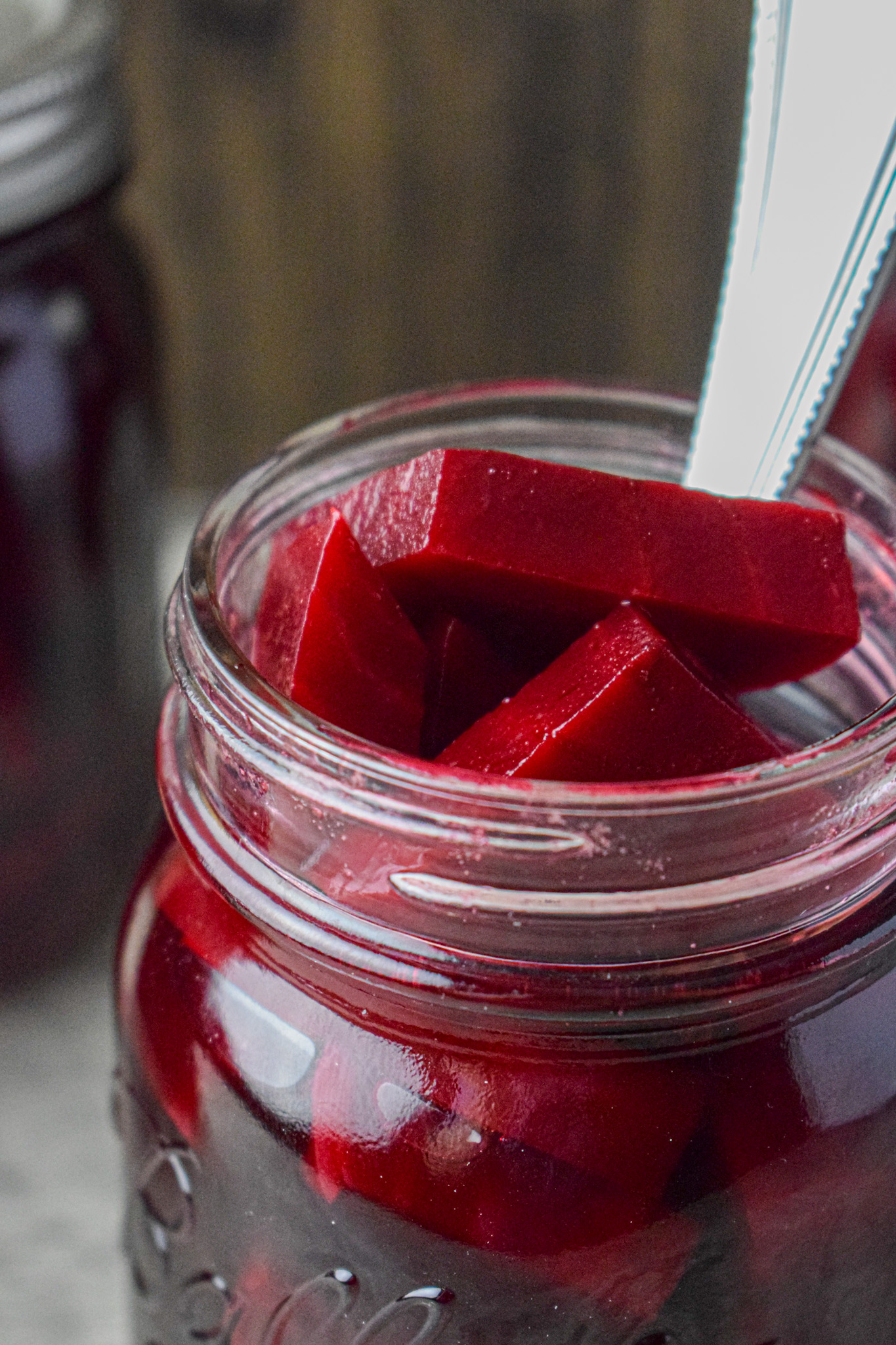
How to Make Pickled Beets
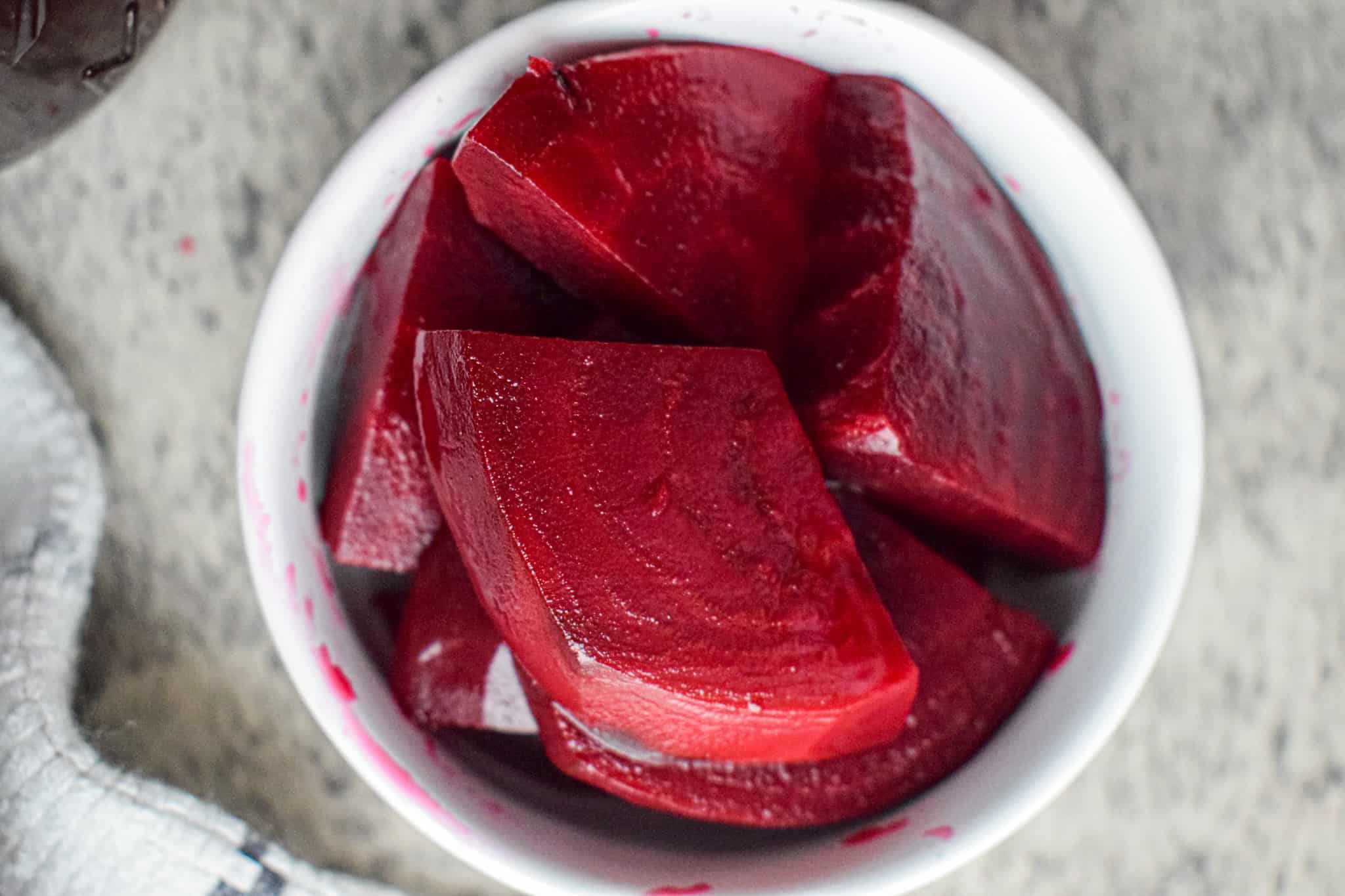
Beets are one of my favorite vegetables to pickle, and this easy pickled beets recipe is the perfect balance of earthy, sweet and tangy. The simple vinegar brine enhances the natural sweetness of the beets without overpowering them, while pickling spice adds just enough warmth and complexity.
It's a classic homemade pickled beets recipe, and over the years I've received so many comments and messages from readers telling me that these taste just like the pickled beets their mom or grandma used to make. To me, that's exactly what a good pickled beet recipe should be, simple, nostalgic and quintessentially homemade, with that old-fashioned sweet and tangy flavor you remember eating straight from the jar.
Why you will love this pickled beets recipe.
- Sweet and tangy: The vinegar and sugar create a classic pickled beet flavor that's bright and balanced without being overly sweet.
- Simple ingredients: You only need fresh beets, vinegar, sugar, salt and pickling spice.
- Two storage options: Keep your pickled beets in the refrigerator or water bath can them for long-term storage.
- Perfect for preserving fresh beets: This is one of my favorite ways to make the most of beet season and enjoy them throughout the year.
- Versatile: Eat them straight from the jar or add them to salads, sandwiches, grain bowls and more.
Jump to:
What is water bath canning?
Canning is simply the process of applying adequate heat to high acid food that is sealed in jars for the allotted time necessary to kill off bacteria and micro-organisms that cause food spoilage. During heating, oxygen is driven out of the jars, causing a vacuum seal to form when the jars cool down. This prevents any outside micro-organisms and oxygen from getting back into the food. When done correctly, canning preserves food safely for at least a year, although probably much, much longer.
You can check out my guide on How to Safely Water Bath Can at Home more resources on safe home preserving.
More preserving recipes for you to enjoy.
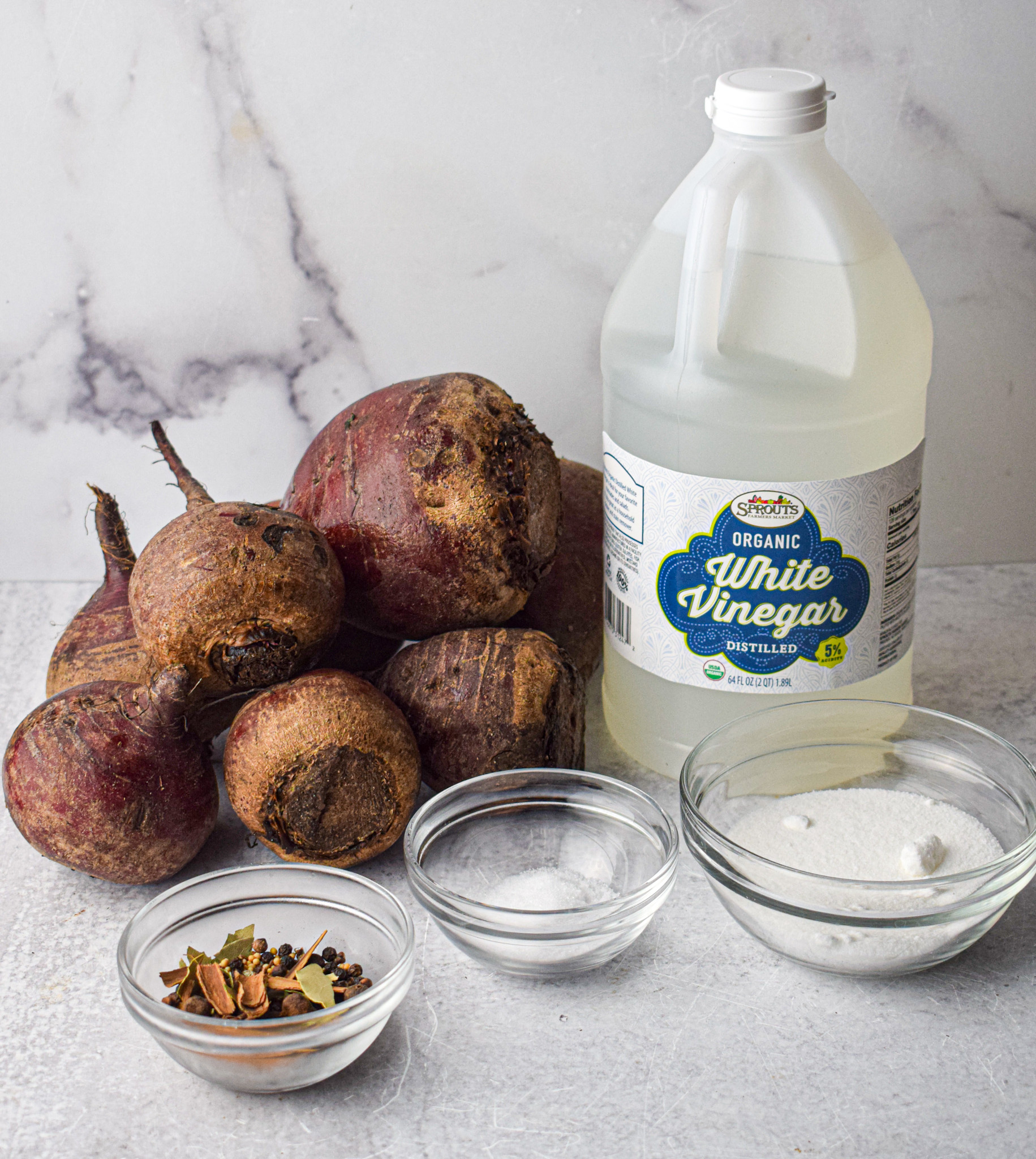
Ingredients & Substitutions
- Beets: I recommend using fresh red beets for this recipe. They have a naturally sweet, earthy flavor and that gorgeous deep red color that makes classic pickled beets so good. Golden beets can also be used.
- White vinegar: I prefer white vinegar for pickled beets because of its clean, tangy flavor. Make sure to use vinegar with at least 5% acidity, especially if you plan to water bath can the beets.
- White granulated sugar: Adds sweetness and balances the acidity of the vinegar. I find ½ cup gives these pickled beets the perfect sweet and tangy balance without making them overly sweet.
- Pickling spice: This is what gives the pickled beets their warm, spiced flavor. Pickling spice blends can vary slightly but typically contain spices like mustard seed, peppercorns, cloves and bay leaves.
- Kosher salt: Enhances the flavor of the beets and the pickling brine. If substituting another type of salt, avoid iodized table salt, which can make the brine cloudy.
- Water: Combines with the vinegar to make the pickling brine.
Note: If you're canning pickled beets, don't reduce the amount of vinegar or increase the amount of water, as this can affect the acidity needed for safe water bath canning.
Equipment
For the Pickled Beets
- Large pot
- Cutting board and knife
- Measuring cups and spoons
For Water Bath Canning
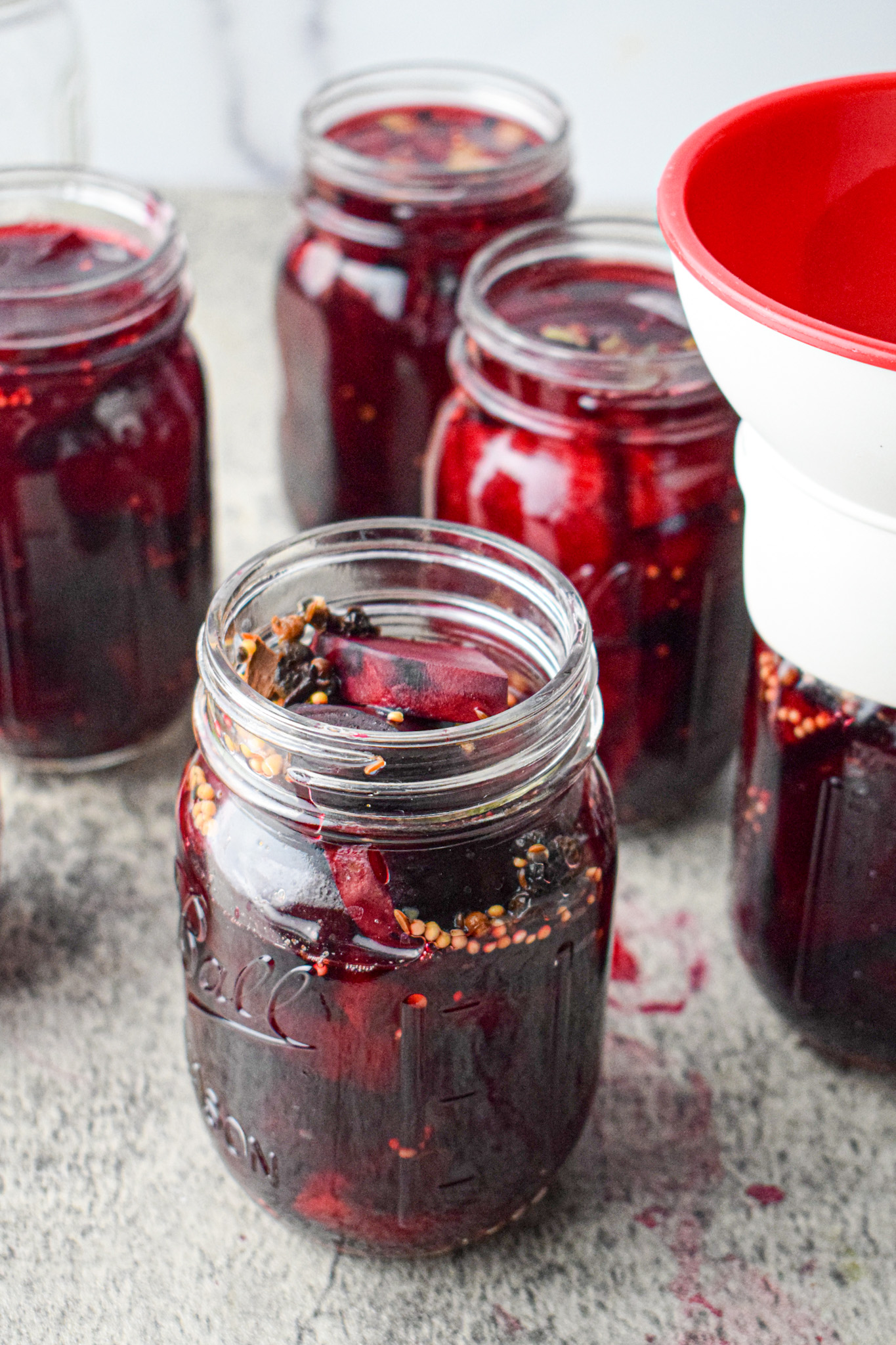
- Mason jars: Make sure the jars are clean and that the lids are brand new. You cannot reuse canning lids.
- Large pot with rack OR Electric Canner: If you only can once in a while using a large pot with a canning rack works just fine. As someone who personally does a lot of canning and I absolutely LOVE my Ball FreshTech Electric Canner.
- Jar lifter: You will need a jar lifter to remove the hot jars from the water bath.
- Funnel: I personally love this canning funnel because it also allows you to measure the headspace easily.
- Ladle: This Prepworks Canning Scoop is my favorite.
Pickled Beets FAQs
Most varieties of beets will work well for this recipe, but red beets are the most commonly used due to their vibrant color and sweet flavor. Golden beets can also be used if you prefer a milder taste and less staining
When properly water bath canned, these pickled beets will keep for up to 18 months when stored in a cool, dark place. Once opened, refrigerate and enjoy within 1-2 months. If you choose not to can them, store the pickled beets in the refrigerator and enjoy within 6 weeks. If you notice an off smell, mold or any other signs of spoilage, discard them.
I personally like using white vinegar for pickling beets, but some people like using apple cider vinegar. You can use any vinegar with an acidity level of 5% or more for safe canning and do not change the ratios of vinegar used.
Yes! Pickled beets are very versatile. Feel free to add onions, garlic, or spices like cinnamon, cloves, mustard seeds, and bay leaves to create unique flavor combinations. Adjust the spice level according to your taste.
After canning, allow the pickled beets to rest for at least 48 hours to allow the flavors to develop. They are best enjoyed after 1-2 weeks of marinating, though they can be eaten sooner if desired.
More recipes for you to enjoy.
Made this pickled beets recipe? Let me know what you think in the comments!
Recipe
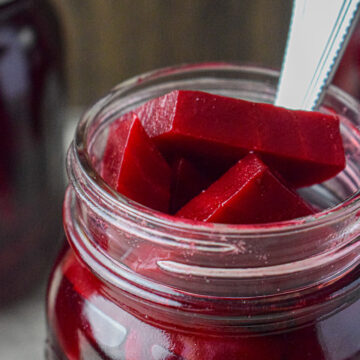
Pickled Beets
Equipment
- Large pot
- Cutting board & knife
- Measuring cups and spoons
- Canning equipment (if using) see above
Ingredients
- 4 lb beets
- 1 cup water
- 2 cups white vinegar at least 5% acidity
- ½ cup white granulated sugar
- 2 tablespoon pickling spice
- 2 teaspoon kosher salt
Instructions
Prepare the beets
- Wash the beets and trim off the beet tops. Then place in a large pot and add water until the beets are just covered. Bring the water to a boil, then reduce heat to a simmer and cook for around 30 minutes until the beets are knife tender. Remove the beets and allow to cool slightly before peeling and cutting into ⅓rd inch slices. Place jars on top of a towel on the counter then tightly pack the beet slices into the jars.
Prepare the brine
- In a sauce pan add water, vinegar, sugar, pickling spice and salt. Bring the mixture to a boil and then turn the heat down to low for 3-5 minutes until the sugar and salt have dissolved. Then remove the pan from the heat.
Fill the jars
- Using a funnel, ladle the brine in the jars leaving ¼ to ½ inch headspace. Then use a knife or chopstick to remove the bubbles. Wipe down the jar rims then add clean lids and rims. At this point you can either place the beets inn the fridge and wait at least one week to allow them to pickle before enjoying. Or you can process them in a water bath and they will be shelf stable for 12-18 months. See instructions below.
Water Bath Canning Instructions
- Place jars on a rack in a large pot and cover with water at least 1-2 inches above the top of the jars. Bring the water to a full rolling boil and boil the jars in the water bath for 20 minutes (adjusting time for altitude).Turn off the heat and allow the jars to rest in the warm water for 5 minutes before removing and placing on a towel on the counter (do not place directly on the counter).Allow the jars to cool undisturbed for about 24 hours until all the lids have sealed.Store sealed jars in a cool dry place for 12-18 months for best quality.*Note* If any of the jars do not seal simply store in the refrigerator and consume within 6 weeks.


Gina
I'm going to try this recipe for the first time but am puzzled as to how many pints I might expect. Did I miss this info or has it not been included anywhere?
jamjarkitchen
Hi Gina- Just updated that in the recipe. I usually get around 5-6 pints depending on how tightly I pack the jars. Hope you enjoy!
George Zirnite
Thanks for this update! I have beets cooking on the stove and needed to know how many jars!
Judy HUlsey
I judge one can sliced beets to a pint. Usually works out that way.
Depends on your filling, how packed you jar, etc.
I usually wait for a good price on cans before I buy.
My Rulers store was 95¢ but I didn't want to go to walmart.
Judith
Gina- Your recipe has a much higher vinegar to sugar ratio. I just want to make sure 2 cups vinegar to 1/2 C sugar is accurate. thanks.
jamjarkitchen
Hi there- yes, it's 2 cups of vinegar to 1/2 cup of sugar. Beets are naturally pretty sweet so I prefer this ratio for a nice sweet and tangy flavor. Let me know what you think!
Megan
Hi there - wondering if it's okay to halve the recipe? I suppose I could make the brine with those then just use whatever I need to fill for the small amount I have. Thoughts?
jamjarkitchen
Hi Megan - Yes, it's absolutely fine to halve the recipe. You just want to be sure to keep the vinegar to water ratio and cover the beets fully. Hope you enjoy!
Melissa
Hi, can I swap out the sugar and replace with honey?
jamjarkitchen
Hi Melissa - From a canning safety perspective that should be fine. I recommend using about 1/4th cup of honey (about half the amount of the sugar), and be sure not to decrease the amount of vinegar. I personally haven't tried this version so I'm not sure about the flavor but if you give it a go let me know how it turns out. Hope you enjoy!
Dee
Can I substitute the sugar? I would prefer to add none. Is that possible? Or for a bit of sweet an I add honey
Joe Reinhart
Having tried more than a few recipes looking for my ma's southern cooking flavor, yours comes up the winner. I admit I add one dried small red chili pepper at canning time, but otherwise, the flavor is just right. Prep...just like I remember. Ma did chunk-style but that's just...knife-work!
I think this is the third ofnyour recipes I have used and they were all great. No-nonsense presentation, and I can skip the peramble if I want.
And I always do! I am always focused on the cooking, not the history or FDA scare-tactics. You make good food, and that is my goal; Good food now.
From Japan,
Thank you.
Jennifer O'Neill
This recipe is so close to the one I use to do with my grandma but have a question. How do I know what altitude to do the beets? I live in Gibbons alberta Canada. What is your altitude compared to ours? We’re at 643 m or 2110 ft?
jamjarkitchen
Hi Jennifer - The general rule of thumb is that you add 1 minute of processing time for every 1,000 feet above 1,000 feet above sea level. So at 2110 feet I'd recommend adding an additional 2 minutes to the boiling time just to be safe. Hope this helps!
Margaret walker
Ahi JJ after removing the air bubbles do I add more of the brine to cover the beets?
jamjarkitchen
Yep! You'll want to make sure the beets are submerged. Hope you enjoy!
LA
This recipe was perfect! I saw gorgeous beets at the farm market and my daughter directed me to this recipe! My grandmother would be proud!
jamjarkitchen
So glad you liked the recipe!
Michael D Gilbertson
I'm guessing they will taste good but over 4 lbs. of beets just filled 5 pints and the prepared liquid barely filled 3 pints.
jamjarkitchen
You’re absolutely right, the amount of pickling liquid can vary quite a bit depending on how tightly the jars are packed and the size of the beet pieces. I tend to pack mine pretty snugly, which means they need less liquid than you might expect. If your jars are more loosely packed, I recommend doubling the brine ingredients to make sure you have plenty to cover everything. Hope they turn out delicious!
Jennifer O'Neill
I love this recipe but have a question. Could you use the brine for other veggies?? I have baby carrots in about to pull and thought this might be good for pickled carrots???
jamjarkitchen
Yes, you can definitely use this brine for other veggies! The flavor will obviously shift a bit depending on what you pickle, but it will still be canning safe. I think baby carrots would be delicious with it. Let me know how they turn out!
Norma Tumberg
Is it safe to reuse brine for canning. Won't the ph be off?
jamjarkitchen
Hi Norma - You’re correct! I don’t recommend reusing brine for canning, as the acidity can change and may no longer be at a safe pH for canning. Always use fresh brine when canning.
Karen
Working on this now! Does anyone reuse the brine?
jamjarkitchen
Hi Karen - I don’t recommend reusing the brine for canning, since the acidity can change once it’s been used. That said, it’s great for quick fridge pickles! you can pour it over sliced onions, cucumbers, or even hard-boiled eggs and keep it in the fridge for a week or two. Hope you enjoy!
Pauleen Lew
Is it possible to roast the beets instead of boiling them?
jamjarkitchen
Hi Pauleen - Yes you can absolutely roast them instead. I recommend covering with foil and roasting at 400 F for about 35-55 minutes (depending on the size of the beets) until fork tender. Just be sure not to use any cooking oil. Hope you enjoy!
William
Two questions:
1. Can pickling salt be substituted for Kosher salt and if so are the quantities the same?
2. How much additional time for processing at 2700 feet altitude?
jamjarkitchen
Hi there!
Yes, pickling salt will work just fine in this recipe. You can substitute it in the same amount called for in the recipe.
At 2,700 feet, you'll want to add 5 minutes to the processing time. The altitude adjustment for this recipe is 5 additional minutes for elevations between 1,000 and 3,000 feet.
Hope that helps, and happy canning!
Claudine
I have not tried this recipe yet but looking to try it today. I don't use sugar typically in cooking. Could I use maple syrup in lieu of sugar and do you think it would taste good? We have someone in the family with pre diabetes so would like to keep it to a minimum but with a natural sweetener
jamjarkitchen
Hi Claudine! Thanks for your question! I haven't tested this recipe using maple syrup, so I can't recommend making that substitution if you're planning to can the beets. When it comes to canning, I always recommend sticking to tested recipes to ensure both the best results and a safe final product.
The good news is that the sugar in this recipe is there primarily for flavor rather than preservation, so if you'd prefer a less sweet pickle, you can reduce the sugar to suit your taste. The beets will simply have a tangier flavor. I just wouldn't recommend substituting it with maple syrup unless you're planning to refrigerate the beets rather than can them.
I hope that helps, and if you give the recipe a try, I'd love to hear what you think!
Judy HUlsey
I always use the recommended quantities regardless of how many jars.
Keeps it right and I freeze the extra till next canning beets event.